When it comes to summer celebrations, destination ceremonies, or outdoor venues, few outfits feel as effortless and stylish as a linen suit. Light, breathable, and naturally relaxed, linen has become a go-to fabric for modern weddings. But one question continues to come up: what exactly is proper Linen Suit Wedding Etiquette?
At Velinzi, we’ve seen firsthand how the right linen suit can elevate a wedding look—or completely miss the mark if worn incorrectly. While linen suits are undeniably comfortable and fashionable, they don’t fit every dress code or setting. Understanding when, where, and how to wear them is key to avoiding common mistakes. In this complete guide, you’ll learn everything about linen suit wedding etiquette, including when it’s appropriate, when it’s not, how to style it correctly, and the essential do’s and don’ts every guest (and groom) should know.
What Is Linen Suit Wedding Etiquette?
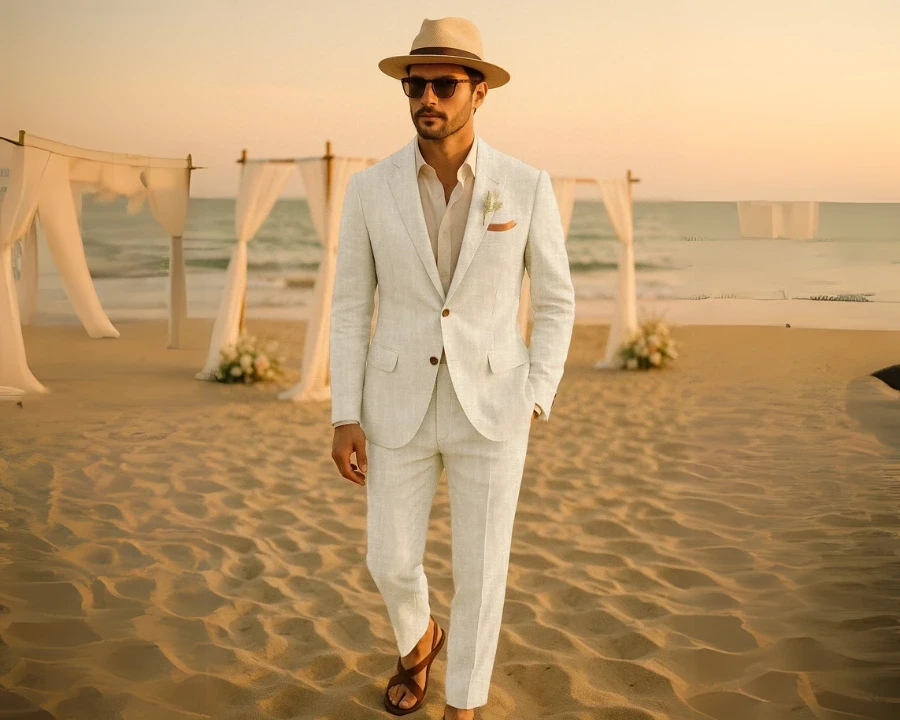
Understanding linen suit wedding etiquette is about knowing when a linen suit aligns with the formality, setting, and expectations of a wedding. While linen offers comfort and effortless style, it also carries a more relaxed aesthetic—meaning it must be chosen and styled carefully to suit the occasion.
Why Etiquette Matters for Wedding Outfits?
Weddings are not just social events—they are meaningful occasions with specific expectations. Whether you’re attending as a guest, standing as a groomsman, or walking down the aisle as the groom, your outfit reflects respect for the couple and the event. That’s why understanding linen suit wedding rules is essential. Wearing the wrong outfit can make you appear underdressed, out of place, or even disrespectful to the host’s vision.
Are Linen Suits Appropriate for Weddings?
The short answer: yes—but only in the right context. Linen suits are perfectly acceptable for:
- Beach weddings
- Outdoor weddings
- Summer weddings
- Destination weddings
- Casual or semi-formal dress codes
However, they may not be suitable for:
- Black-tie weddings
- Formal evening receptions
- Luxury indoor venues
So if you’re wondering, “Can you wear a linen suit to a wedding?”—the answer depends on the setting, season, and dress code.
When It’s Appropriate to Wear a Linen Suit to a Wedding
Choosing the right moment to wear linen isn’t just about comfort—it’s about reading the room, understanding the dress code, and aligning your outfit with the overall tone of the event. Linen works best when the setting naturally supports its relaxed elegance.
Best Wedding Types for Linen Suits
Certain wedding environments naturally complement the texture and feel of linen, making it not just acceptable—but ideal.
- Beach Weddings: This is where the beach wedding linen suit truly shines. The breathable nature of linen helps regulate body temperature in heat and humidity, while its slightly relaxed drape matches the laid-back coastal atmosphere. A structured wool suit in this setting would feel out of place—both visually and physically.
- Outdoor & Garden Weddings: A garden wedding linen suit blends seamlessly with natural surroundings. Earthy tones, soft neutrals, and lightweight fabrics enhance the organic aesthetic of outdoor venues. Linen’s texture adds depth without appearing overly formal, striking the right balance between polished and approachable.
- Destination Weddings: For travel-heavy events, a destination wedding linen outfit offers both practicality and style. Linen is lightweight, easy to pack compared to heavier fabrics, and appropriate for warmer climates. When styled correctly, it delivers a refined look without sacrificing comfort during long travel days.
- Casual & Semi-Formal Weddings: In casual or semi-formal wedding dress codes, linen becomes highly versatile. A well-tailored linen suit paired with elevated accessories—such as leather loafers or a structured shirt—can easily meet semi-formal expectations while maintaining a relaxed edge.
Ideal Seasons for Linen Suits
Seasonality plays a critical role in linen suit wedding etiquette, and ignoring it is one of the most common styling mistakes.
- Summer Weddings: Linen performs at its best in high temperatures. A summer wedding linen suit allows for airflow, reduces overheating, and maintains a clean silhouette even in humid conditions. It’s one of the most functional yet stylish choices for warm-weather ceremonies.
- Spring Weddings: Spring offers a transitional climate where linen still works well, especially in lighter shades. Soft pastels and neutral tones complement the season’s color palette while maintaining a fresh, breathable look.
- Tropical Climates: In consistently warm and humid environments, linen becomes less of a style choice and more of a necessity. Tropical wedding attire often favors linen for its moisture-wicking and cooling properties, making it the most practical option available.
Linen Suit for Guests vs Groom vs Groomsmen
The role you play at the wedding influences how you approach linen styling.
- Guests: A linen suit wedding guest outfit offers flexibility. Guests can adjust formality through color, fit, and accessories. For example, adding a tie or opting for darker tones can elevate the look, while open collars and lighter shades keep it relaxed.
- Groom: A linen suit groom outfit works particularly well in outdoor or destination weddings. The key here is refinement—sharp tailoring, premium fabric quality, and thoughtful coordination with the wedding theme. Linen for grooms should feel intentional, not casual.
- Groomsmen: Coordinated linen suits for groomsmen create visual harmony across the wedding party. Matching tones or complementary shades help maintain cohesion, while linen ensures comfort for long مراسم and outdoor conditions.
When You Should NOT Wear a Linen Suit?
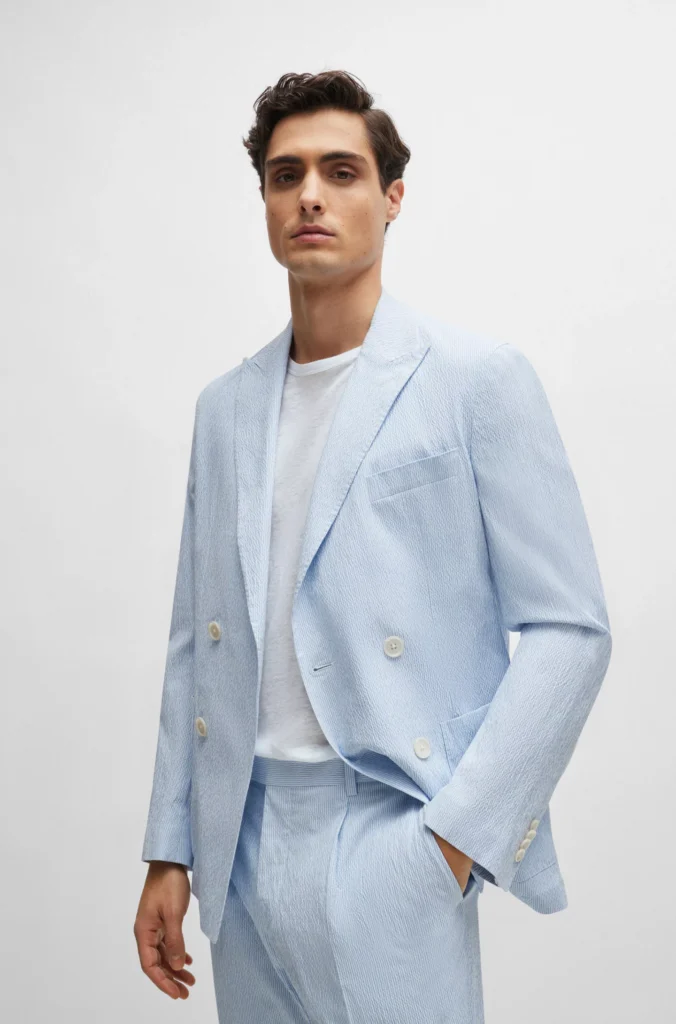
Just as important as knowing when to wear linen is understanding when to avoid it. Misjudging this can immediately undermine your overall appearance.
Formal & Black-Tie Weddings
A linen suit at a black-tie wedding is a clear mismatch. Black-tie events demand structure, sharpness, and formality—qualities linen simply doesn’t provide. In these settings, traditional options like wool suits or tuxedos are the appropriate choice.
- Wool suits
- Tuxedos
- Structured formalwear
Evening or Luxury Venue Weddings
Evening weddings, especially those held in upscale venues, typically call for richer textures and more formal fabrics. Linen, with its matte finish and relaxed drape, can appear too casual under artificial lighting or in refined indoor spaces.
Cold Weather Weddings
Linen is inherently a warm-weather fabric. Wearing it in fall or winter not only feels impractical but also visually contradicts the season. Heavier materials like wool or tweed are better suited for colder climates.
Linen Suit Wedding Etiquette – Do’s
Mastering the details is what separates a well-dressed guest from one who simply “fits in.” These do’s focus on elevating linen from casual to wedding-appropriate.
Choose the Right Fit
Fit is arguably the most important factor in linen suit etiquette. A poorly fitted linen suit exaggerates wrinkles and looks unstructured.
- Opt for tailored linen suit wedding styles
- Slim or modern cuts create cleaner lines
- Avoid excess fabric that leads to unnecessary creasing
A sharp fit instantly upgrades the perception of linen.
Stick to Appropriate Colors
Color selection should align with both the setting and the level of formality. The most reliable linen suit colors for weddings include:
- Beige linen suit wedding
- Light grey linen suit wedding
- Blue linen suit wedding
- White linen suit wedding (used carefully)
- Soft pastel tones
These shades reflect light well, complement outdoor environments, and maintain a refined aesthetic without drawing excessive attention.
Pair with the Right Shirt
The shirt acts as the foundation of your outfit. It should enhance—not compete with—the suit. Recommended choices:
- Crisp white shirt for a clean, timeless look
- Light blue or pastel tones for seasonal alignment
- Breathable cotton or linen blends for comfort
Avoid overly heavy or overly formal shirt fabrics that clash with linen’s relaxed nature.
Wear Suitable Shoes
Footwear should match the tone of the suit while maintaining balance. The best shoes for linen suit wedding looks include:
- Leather loafers for semi-formal settings
- Derby shoes for a slightly more structured appearance
- Suede loafers for texture and softness
- Espadrilles for beach environments
Color-wise, stick to:
- Brown
- Tan
- Light grey
These tones harmonize with linen’s natural palette.
Keep It Neat and Pressed
Wrinkles are part of linen’s character—but control is key.
- Light creases are acceptable and expected
- Avoid heavily wrinkled or crumpled fabric
- Always steam your suit before the event
The goal is to look relaxed, not careless.
Wearing a linen suit to a wedding is less about following rigid rules and more about understanding context, balance, and presentation. When chosen thoughtfully and styled with intention, linen can deliver a look that is both comfortable and refined—perfectly aligned with modern wedding aesthetics.
Linen Suit Wedding Etiquette – Don’ts
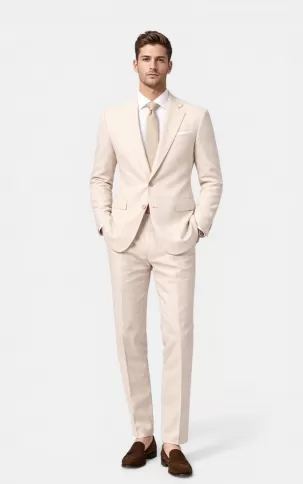
Understanding what not to do is just as important as knowing the rules to follow. These common mistakes are often what separate a well-executed linen look from one that feels out of place or poorly considered.
Don’t Wear Linen to Black-Tie Events
This remains the most fundamental rule in linen suit wedding etiquette. A black-tie dress code signals a high level of formality that linen simply cannot meet due to its relaxed structure and matte texture. If the invitation specifies “black tie”, linen should be completely avoided. Instead, opt for:
- Tuxedos
- Structured wool suits
- Formal eveningwear
Wearing linen in this context doesn’t just look casual—it directly contradicts the expected standard.
Avoid Overly Wrinkled Suits
While linen is naturally prone to creasing, excessive wrinkles can quickly make your outfit appear careless rather than stylish. A common mistake is: Wearing 100% linen without proper preparation. To maintain a polished appearance:
- Use a steamer before the event
- Hang the suit properly prior to wearing
- Consider linen-blend fabrics for better wrinkle resistance
The goal is controlled texture—not visible neglect.
Don’t Choose Loud or Flashy Colors
Color plays a critical role in maintaining elegance. Linen already has a relaxed visual character, so overly bold choices can easily tip the outfit into being distracting. Avoid:
- Neon shades
- Overly saturated colors
- Loud patterns or prints
Instead, lean toward classic, muted tones that align with the wedding setting. Subtlety always reads more refined in formal environments.
Avoid Heavy or Formal Accessories
Linen’s lightweight and breathable nature should be matched with equally balanced accessories. Pairing it with overly formal elements creates visual inconsistency. Avoid:
- Thick silk ties
- Bulky belts
- Heavy, high-gloss dress shoes
These items can overpower the softness of linen and disrupt the overall harmony of the outfit.
Don’t Ignore the Wedding Theme
One of the most overlooked aspects of linen suit etiquette is failing to align with the wedding’s overall theme and setting. Always evaluate:
- The venue (beach, garden, ballroom)
- The dress code (casual, semi-formal, formal)
- The time of day (daytime vs evening)
Ignoring these factors often results in an outfit that feels disconnected from the event.
How to Style a Linen Suit for a Wedding?
Styling a linen suit correctly is where etiquette meets personal expression. The right combinations and details can elevate linen from casual to wedding-appropriate with ease.
Linen Suit Color Combinations
Well-balanced color pairings are essential for creating a cohesive look. Some timeless combinations include:
- Beige suit + white shirt + brown loafers
- Blue suit + light shirt + tan shoes
- Light grey suit + pastel shirt + suede loafers
These combinations work across various wedding settings because they maintain a clean, seasonal, and versatile aesthetic without appearing overstyled.
Tie or No Tie?
A frequent question in linen suit wedding styling is whether a tie is necessary. The answer depends on the level of formality:
- Optional for casual or beach weddings
- Recommended for semi-formal settings
Adding a tie—preferably in a lightweight fabric—can instantly refine your look without making it feel too rigid.
Accessories That Work Best
When it comes to accessories, restraint is key. Linen suits benefit from a minimalist approach that complements their natural texture. Best options include:
- A simple pocket square
- A lightweight leather belt
- A clean, understated watch
Over-accessorizing can make the outfit feel forced rather than effortless.
Best Shoes to Wear With a Linen Suit at Weddings
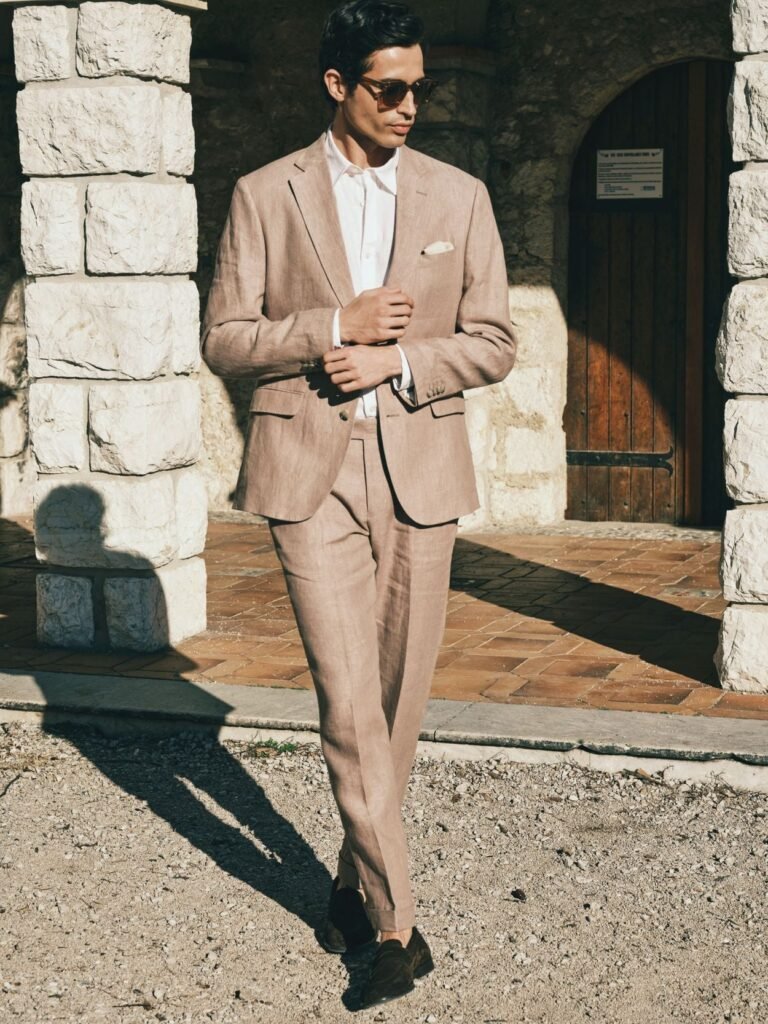
Footwear plays a defining role in how formal or relaxed your linen suit appears. The right choice can anchor the entire outfit.
Formal Options
For more structured settings:
- Leather loafers
- Derby shoes
These provide enough polish to meet semi-formal expectations while still complementing linen’s relaxed nature.
Casual Options
For laid-back environments:
- Espadrilles
- Suede loafers
These options enhance comfort and align naturally with beach or outdoor wedding settings.
Shoe Color Guide
Color coordination should remain soft and cohesive. The most reliable choices include:
- Brown
- Tan
- White
- Light grey
Black shoes can sometimes feel too harsh against the light tones typically associated with linen, so they should only be used when absolutely necessary.
Linen vs Other Fabrics for Wedding Etiquette
Choosing the right fabric is a foundational part of linen suit wedding etiquette, as it directly affects how your outfit is perceived in terms of formality, comfort, and seasonal appropriateness.
Linen vs Cotton
While both are lightweight and breathable, they serve slightly different purposes in wedding settings.
- Linen: for its superior breathability and moisture-wicking properties, making it ideal for hot, humid environments. Its natural texture gives off a relaxed, effortless look.
- Cotton: Offers more structure and a smoother finish, which can appear slightly more polished while still remaining comfortable.
In terms of etiquette, linen leans more casual, while cotton can bridge the gap between casual and semi-formal more easily.
Linen vs Wool
This is where the distinction becomes more pronounced.
- Linen: Light, airy, and inherently casual—best suited for daytime, outdoor, or destination weddings.
- Wool: Structured, refined, and traditionally formal—ideal for evening events, formal venues, and black-tie dress codes.
Understanding this contrast helps avoid one of the most common mistakes: wearing linen in situations that demand the sharpness and weight of wool.
Linen Blends
For those who want the comfort of linen without its drawbacks, blends offer a practical solution.
- Reduced wrinkling
- Improved durability
- Better shape retention
Linen-cotton or linen-wool blends are particularly effective for weddings, as they maintain breathability while enhancing overall structure—making them more adaptable across different dress codes.
Practical Tips for Wearing Linen Suits to Weddings
Wearing linen well requires attention to detail. Small adjustments in preparation and handling can significantly improve how the suit looks throughout the event.
How to Prevent Wrinkles?
Wrinkling is inevitable with linen, but it can be managed effectively.
- Steam the suit before wearing to smooth out major creases
- Hang it on a structured hanger to maintain shape
- Avoid prolonged sitting, especially before key moments like photos
The objective is not to eliminate wrinkles entirely, but to keep them controlled and intentional.
Travel Tips for Destination Weddings
For destination wedding linen suits, proper packing is essential to preserve the garment’s appearance.
- Use a garment bag whenever possible
- Fold carefully along natural seams if packing in luggage
- Pack early and unpack immediately upon arrival to allow wrinkles to relax
Taking these steps ensures the suit looks presentable without requiring extensive last-minute adjustments.
FAQs About Linen Suit Wedding Etiquette
Is a linen suit too casual for a wedding?
It depends entirely on the dress code. Linen is ideal for casual and semi-formal weddings, especially in outdoor or warm-weather settings. However, it is not appropriate for black-tie or highly formal events.
Can you wear a linen suit to an evening wedding?
In most cases, it’s not recommended. Linen tends to look too relaxed for evening settings unless the wedding is explicitly casual or held outdoors in a warm climate.
Should you wear a tie with a linen suit?
This depends on the level of formality. A tie is optional for casual weddings but can help elevate the outfit for semi-formal occasions.
What color linen suit is best for weddings?
Neutral tones such as beige, light grey, and blue are the most versatile and widely accepted. These colors align well with seasonal palettes and maintain a refined appearance.
Can the groom wear a linen suit?
Yes, a linen suit is an excellent choice for grooms in beach, outdoor, or destination weddings. The key is ensuring proper tailoring and cohesive styling with the overall wedding theme.
Conclusion
Understanding Linen Suit Wedding Etiquette is all about context. Linen suits are not inherently too casual—they simply need to be worn in the right setting, styled correctly, and matched to the dress code. At Velinzi, we believe that confidence comes from knowing the rules—and knowing when to bend them. A well-chosen linen suit can make you look effortlessly stylish, comfortable, and perfectly in tune with the wedding atmosphere. Follow the do’s, avoid the don’ts, and you’ll never have to second-guess your outfit again.