At Velinzi, wedding style has never been about rigid rules—it’s about understanding context, climate, and character. Over the past decade, as weddings have shifted toward outdoor settings, destination venues, and more relaxed expressions of formality, one question appears again and again: is a black linen suit appropriate for a wedding?
The rise of the Black Linen Suit for Weddings reflects a broader movement in menswear—away from heavy tradition and toward breathable fabrics, thoughtful tailoring, and understated elegance. Yet linen, especially in black, sits at an interesting crossroads. It can look refined or too casual, intentional or misplaced, depending entirely on when and how it’s worn.
This guide exists to answer one thing clearly: when a black linen wedding suit works beautifully—and when it doesn’t. Whether you’re a groom, groomsman, or wedding guest, understanding these distinctions makes all the difference.
Understanding the Black Linen Suit in a Wedding Context

Before deciding whether a black linen suit belongs at a wedding, it’s essential to understand what truly defines it—and why this combination of fabric and color feels so different from traditional wedding suits. The answer lies not only in how it looks, but in how it behaves within a ceremonial setting.
What Defines a Black Linen Wedding Suit?
A black linen wedding suit is defined by two core elements: fabric and tone. Linen is a natural, breathable fiber known for its airflow, lightweight feel, and relaxed texture. Black, on the other hand, carries formality, depth, and visual authority.
When combined, black linen produces a suit that feels less rigid than black wool, but more refined than casual cotton or blends. The texture softens the darkness of black, preventing it from feeling overly severe, while the color elevates linen beyond its usual resort or summer casual associations.
Unlike traditional wool wedding suits, linen drapes differently. It moves more freely, creases naturally, and reflects light in a subtler way. These characteristics define how appropriate a black linen suit feels in a wedding environment.
Why Black Linen Has Entered Modern Wedding Style
Weddings today are no longer confined to formal halls and evening ceremonies. Outdoor weddings, beach weddings, garden celebrations, and destination events have reshaped expectations.
The modern black linen suit fits into this shift because it offers:
- Breathability for warm climates
- Visual simplicity for minimalist aesthetics
- Comfort for long ceremonies and receptions
For couples embracing relaxed formalwear, linen becomes a practical and stylistic choice—especially when tailored with intention.
When a Black Linen Suit for Weddings Works Perfectly?
A Black Linen Suit for Weddings does not succeed by chance. Its effectiveness depends heavily on environment, season, and the overall tone of the celebration. When these elements align, black linen moves from being a risky choice to a highly appropriate one—effortless, modern, and visually balanced.
Summer and Warm-Climate Weddings
Summer weddings and hot-weather ceremonies present one of the clearest cases where a black linen suit truly excels. Linen’s open weave allows consistent airflow, preventing heat from becoming overwhelming during long outdoor events. Compared to wool, which retains warmth, linen remains noticeably cooler and lighter—an essential advantage in high-temperature settings. For weddings held in:
- Mediterranean climates
- Tropical destinations
- Southern or coastal regions
a lightweight black linen suit offers a rare balance of comfort and formality. In these conditions, black does not appear heavy or oppressive. Instead, the texture of linen softens the color, grounding the look while maintaining a composed, wedding-appropriate presence. When tailored properly, the suit retains structure where it matters—through the shoulders, chest, and trouser line—while allowing the fabric to move naturally with the body.
Outdoor, Beach, and Destination Weddings
A black linen suit for beach weddings or destination ceremonies works best in settings that value intention over rigidity. Outdoor weddings introduce variables that traditional formalwear often struggles with:
- Uneven or natural terrain
- Strong daylight and shifting shadows
- A blend of casual and ceremonial elements
In these environments, black linen adapts effortlessly. It avoids the stiffness and visual heaviness of classic formal suits, while still reading as refined. Against sand, stone, greenery, or ocean backdrops, black linen photographs with depth and subtle contrast rather than stark formality. Destination weddings add another practical advantage. Linen’s lightweight nature makes it easy to pack, travel with, and wear comfortably throughout multi-day celebrations—an understated but meaningful benefit.
Modern, Minimalist, and Contemporary Wedding Themes
Minimalist and contemporary weddings prioritize clarity, proportion, and restraint. Excess shine, rigid structure, or heavy detailing can feel visually out of place. In this context, a minimalist black linen suit becomes a deliberate design choice. Its strength lies not in decoration, but in:
- Clean tailoring
- Quality of fabric
- Balanced proportions
Modern venues—such as art galleries, architectural spaces, or intimate urban settings—naturally complement the matte texture and understated authority of black linen. The suit integrates seamlessly into these environments, supporting the aesthetic rather than competing with it.
Black Linen for Grooms and Groomsmen
For the groom, a black linen groom suit communicates confidence through restraint. It allows individuality to emerge subtly, particularly through fit, fabric choice, and carefully selected accessories, rather than overt formality. For groomsmen, black linen provides cohesion without visual uniformity. Slight variations in shirts, footwear, or styling details remain harmonious because the fabric itself establishes a relaxed, consistent foundation.
This makes black linen especially effective for wedding parties seeking coordination that feels natural rather than forced—structured enough for ceremony, relaxed enough for celebration.
When season, setting, and theme align, a black linen suit becomes one of the most practical and visually balanced options available for modern weddings. Its success lies not in standing out, but in fitting seamlessly into the moment it is worn.
When a Black Linen Suit for Weddings Doesn’t Work?
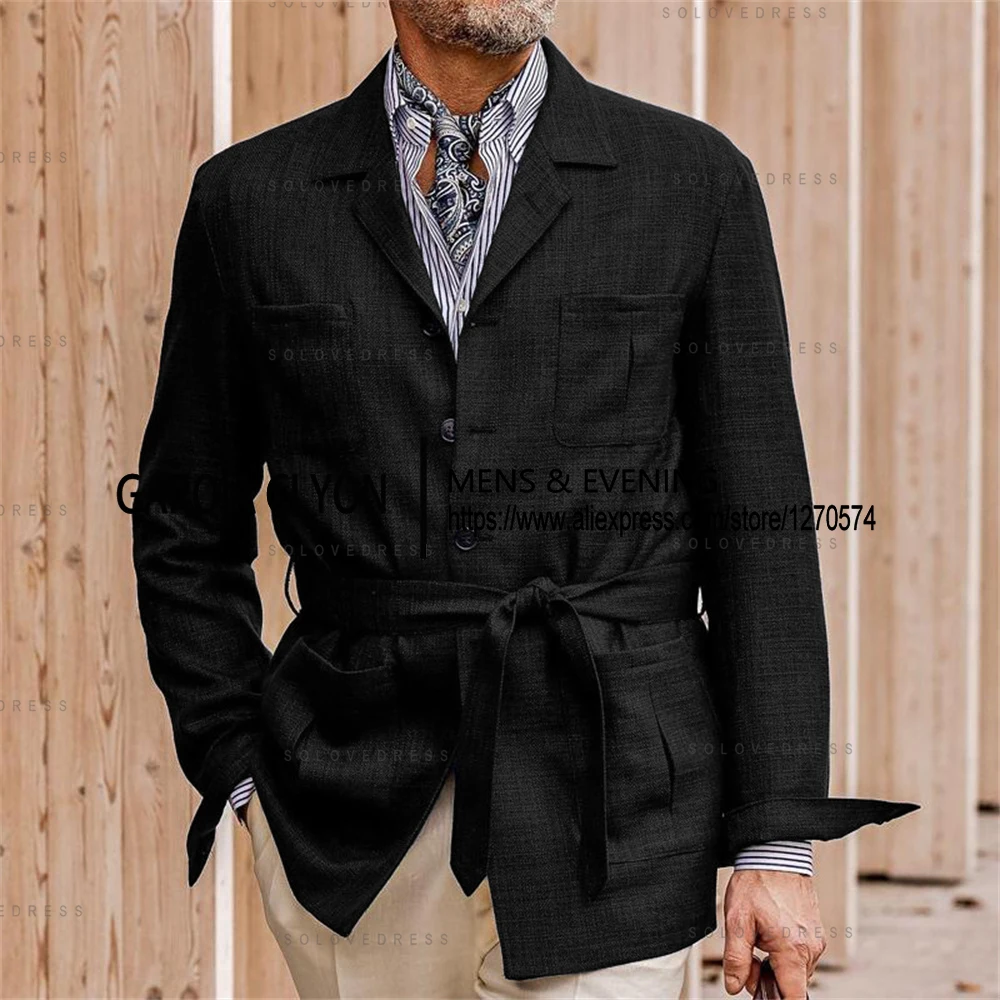
While a Black Linen Suit for Weddings offers flexibility in many modern settings, it is not a universal solution. Certain wedding environments still demand structure, weight, and visual formality that linen—by its nature—cannot fully provide. Recognizing these limitations is key to avoiding an outfit that feels mismatched or underdressed.
Very Formal or Traditional Weddings
In black-tie weddings or strictly formal evening ceremonies, linen generally falls short of expectations. These events are built around established dress codes that prioritize:
- Structured wool suits or tuxedos
- Clearly defined silhouettes
- Fabrics capable of holding sharp, uninterrupted lines
Linen behaves differently. Its relaxed drape and tendency to crease naturally introduce softness where formality calls for precision. Even in black, linen lacks the visual authority and architectural presence required for evening weddings that adhere closely to tradition. In these settings, a black linen suit may read as too casual—not because of its color, but because of how the fabric performs under formal scrutiny.
Religious or Conservative Ceremonies
Many religious or culturally traditional weddings carry expectations that go beyond aesthetics. Attire often serves a symbolic role, reflecting respect, modesty, and adherence to long-established norms. Within these contexts, a black linen suit can appear:
- Too relaxed in texture
- Insufficiently ceremonial in structure
- Visually misaligned with the formality of the ritual
Fabric choice becomes especially important here. Even when tailored well, linen’s informal character may unintentionally undermine the seriousness of the occasion. In such cases, respecting cultural context and tradition should take precedence over stylistic preference.
Cold-Weather or Winter Weddings
Linen is fundamentally a warm-weather fabric, designed for airflow rather than insulation. For winter weddings or events held in colder climates, its limitations become immediately apparent. Even when layered, linen lacks both the thermal properties and the visual weight expected in colder seasons. Against winter backdrops—heavy textures, darker atmospheres, and layered garments—a black linen suit can feel seasonally disconnected and out of place.
In these conditions, wool or heavier fabric blends offer a more coherent and practical alternative, aligning better with both climate and aesthetic expectations.
A black linen suit succeeds only when its inherent qualities align with the wedding’s formality, climate, and cultural context. When those elements conflict, choosing a more structured and seasonally appropriate fabric ensures the overall look remains respectful, intentional, and appropriate.
How Formal Is a Black Linen Suit for a Wedding?
Formality is one of the most common points of confusion when considering a Black Linen Suit for Weddings. While the color black traditionally signals elegance, the fabric itself introduces a more relaxed tone. Understanding where black linen sits on the formality spectrum helps avoid misinterpretation and ensures the outfit aligns with the event’s expectations.
Understanding Wedding Dress Codes
Wedding dress codes are designed to establish a shared visual language for the occasion. A black linen wedding suit generally fits within:
- Casual weddings
- Smart-casual ceremonies
- Semi-formal daytime weddings
It occupies a middle position—less structured than traditional formalwear, yet far more intentional than everyday casual attire. The breathable texture of linen naturally softens the overall look, which is why black linen rarely suits strict formal or evening-only dress codes. In settings where flexibility and comfort are valued alongside appearance, black linen reads as appropriate, modern, and well-considered.
Is Black Linen Appropriate for Wedding Guests?
For wedding guests, suitability depends almost entirely on context rather than personal preference. A black linen suit for wedding guests works best when:
- The wedding takes place outdoors
- The invitation suggests relaxed elegance or modern styling
- The ceremony is held during the day or early evening
In these scenarios, black linen appears polished without overshadowing the formality of the occasion. However, when invitations indicate high formality, traditional expectations, or evening attire, black linen risks appearing underdressed. In such cases, more structured fabrics better reflect the tone of the event.
A black linen suit communicates refinement through ease rather than rigidity. Understanding its position within wedding dress codes ensures it complements the event rather than competing with its level of formality.
How to Style a Black Linen Suit for a Wedding?
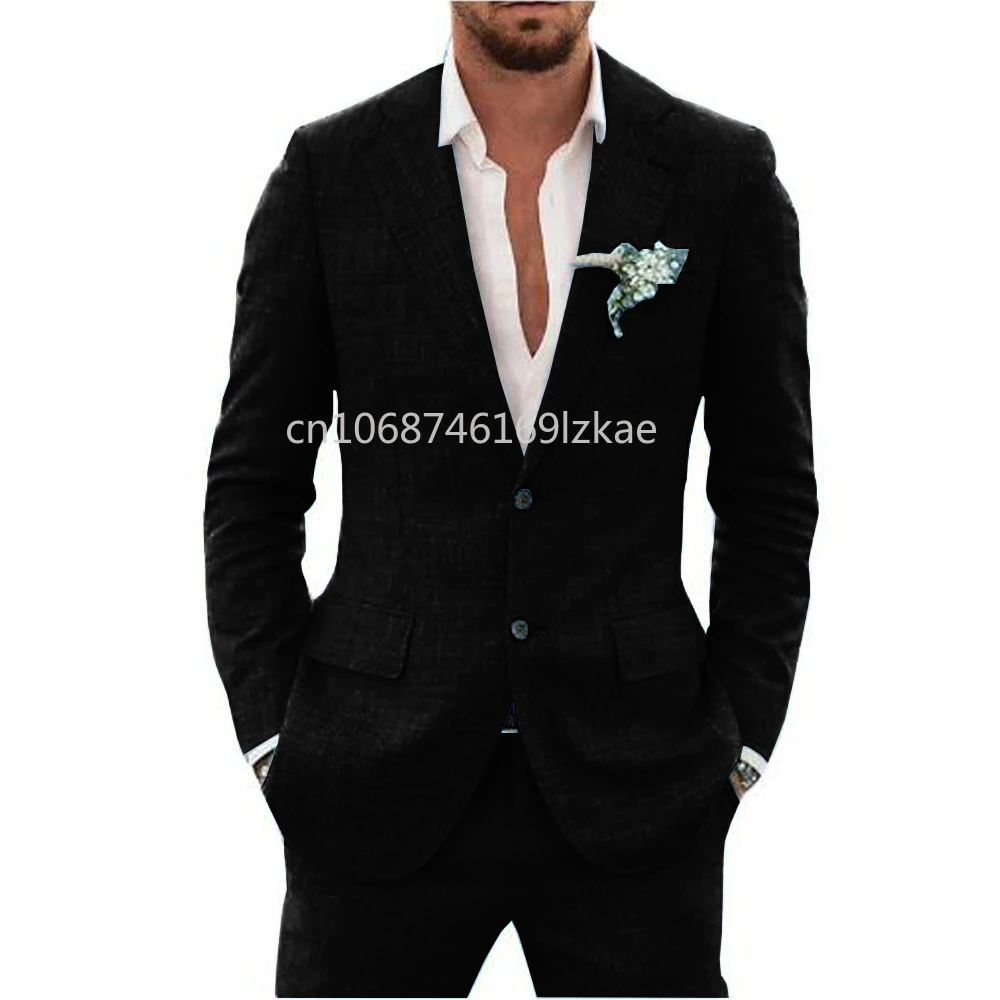
Styling is the element that determines whether a black linen suit appears thoughtfully chosen or unintentionally casual. Because linen already carries a relaxed character, every accompanying piece—from shirts to shoes—must reinforce balance and cohesion rather than compete for attention.
Shirt Choices That Elevate the Look
A black linen suit with a white shirt remains the most reliable and wedding-appropriate combination. Crisp white creates visual contrast, sharpens the overall silhouette, and highlights the texture of the linen without overwhelming it. Breathable cotton or fine linen shirts work best, especially in warm-weather settings. Other suitable shirt options include:
- Soft off-white or ivory tones
- Light neutral shades that maintain a clean appearance
Shirts with heavy textures, bold patterns, or overly casual details tend to dilute the refinement of the suit and should be avoided. Simplicity at this level reinforces intention.
Shoes That Define the Outfit
Footwear plays a critical role in grounding the look. For wedding settings, shoes should introduce structure without adding unnecessary formality. Well-suited options include:
- Leather loafers for relaxed yet polished balance
- Minimal lace-up shoes for semi-formal environments
A black linen suit with loafers often strikes the most effective middle ground, complementing the fabric’s softness while maintaining a composed finish. Sandals, if worn at all, should be limited to highly casual beach weddings and selected with restraint to avoid undermining the overall look.
Accessories: Less Is More
Accessories should enhance rather than dominate a black linen wedding outfit. The goal is cohesion, not excess. Appropriate choices include:
- Lightweight ties or going without a tie altogether
- Subtle pocket squares in neutral tones
- Simple boutonnieres that echo the wedding’s palette
A black linen suit without a tie often feels especially appropriate in warm climates, reinforcing the relaxed elegance that linen naturally provides.
Successful styling of a black linen suit relies on restraint. When each element is chosen to support the fabric’s character, the result is a wedding look that feels refined, intentional, and well-balanced.
Fit and Construction: What to Look For
With linen, fit and construction are not secondary considerations—they define how appropriate the suit appears in a wedding setting. Because linen naturally creases and moves with the body, poor structure or imprecise tailoring becomes immediately visible. Choosing the right balance between form and ease is essential.
Tailored vs Relaxed Fit
Fit matters more with linen than many expect. A tailored black linen suit provides clean lines through the shoulders, chest, and trousers, preventing the fabric from appearing loose or unintentional. Proper tailoring allows linen to drape naturally while still maintaining visual discipline.
A relaxed fit, on the other hand, can work well for more casual weddings—particularly outdoor or destination ceremonies—where comfort and movement take priority. The key is proportion. Even relaxed silhouettes should maintain shape through strategic tailoring, avoiding excess fabric that reads as careless rather than effortless.
The objective remains consistent: structure without stiffness, ease without disorder.
Unstructured Jackets and Two-Piece Sets
An unstructured black linen blazer enhances comfort by eliminating heavy canvassing and padding. This construction aligns naturally with linen’s breathable character, allowing greater mobility and a softer silhouette.
When paired with matching trousers, the result is a cohesive two-piece black linen suit that adapts seamlessly to various wedding environments. The outfit remains unified and intentional, while still offering the flexibility expected in modern, warm-weather celebrations.
In black linen wedding suits, fit and construction determine credibility. When proportion and structure are handled correctly, linen’s natural qualities become an asset rather than a compromise.
Black Linen Suit vs Other Wedding Suit Fabrics
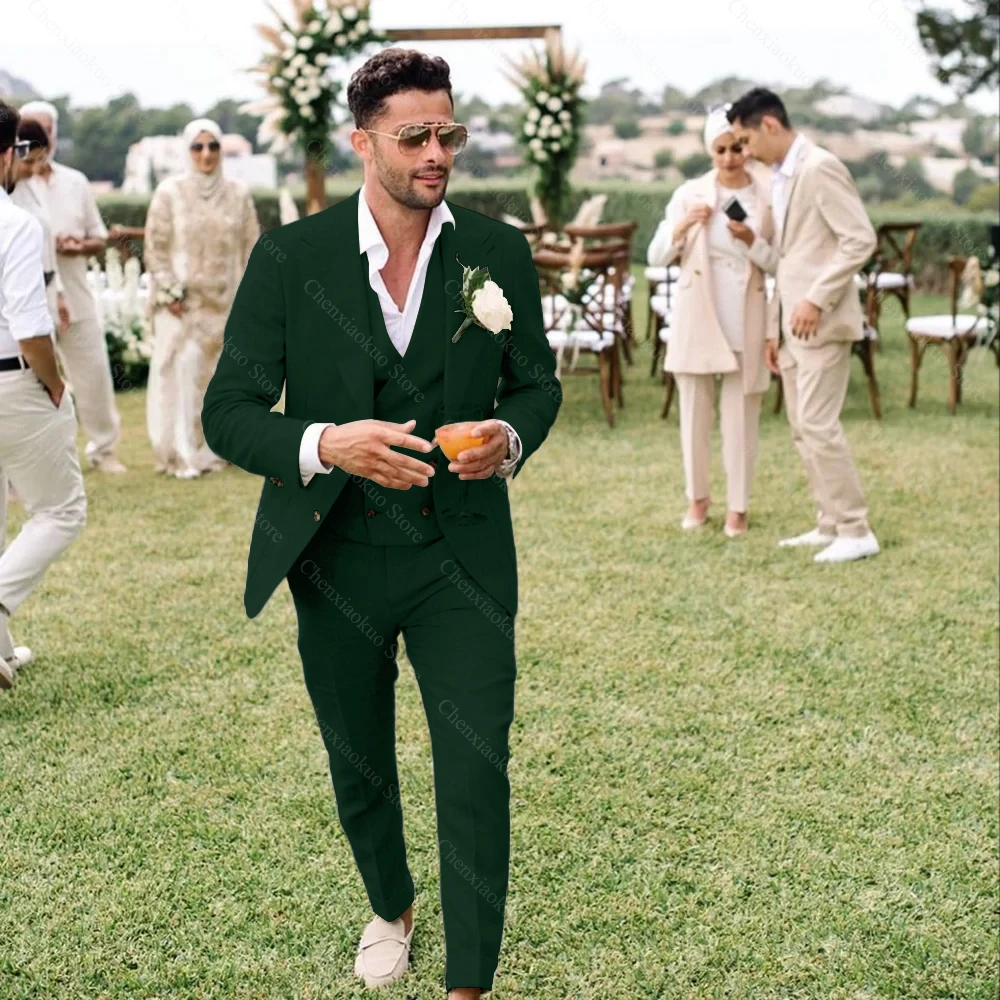
Choosing the right wedding suit fabric is as important as choosing the style itself. Each material communicates a different level of formality, comfort, and seasonal appropriateness. Understanding how black linen compares to other common wedding suit fabrics helps clarify when it is the most suitable option—and when it is not.
Black Linen vs Wool Wedding Suits
Wool has long been the standard for traditional wedding attire due to its structure, durability, and ability to hold sharp lines. It offers visual authority and warmth, making it well-suited for formal settings and cooler temperatures.
Linen, by contrast, prioritizes breathability and movement. Its lighter weight and open weave make it ideal for warm-weather weddings, outdoor ceremonies, and relaxed formal environments. Rather than sharpness, linen delivers softness and natural flow. Choosing between black linen and wool depends primarily on:
- Season and climate
- Wedding venue and setting
- Expected dress code and formality
Neither fabric is inherently superior. Each becomes appropriate—or inappropriate—only when evaluated within its specific context.
Linen vs Cotton for Weddings
Cotton is often considered a casual alternative due to its familiarity and smooth surface. While comfortable, cotton lacks the textured depth and airflow that linen naturally provides. For weddings, linen tends to appear more intentional and elevated, especially in tailored silhouettes. Cotton, unless expertly cut and styled, can risk reading as everyday wear rather than ceremonial attire. When visual presence, breathability, and seasonal alignment matter, linen generally offers a clearer advantage over cotton in wedding settings.
Fabric choice shapes perception. Understanding how black linen compares to wool and cotton ensures the suit aligns not only with personal style, but with the expectations of the wedding itself.
Common Mistakes to Avoid
A Black Linen Suit for Weddings succeeds through precision and restraint. Most missteps occur not because the suit itself is inappropriate, but because key details are overlooked. Understanding these common mistakes helps ensure the final look feels intentional rather than accidental.
- Choosing poor-quality linen: Low-quality linen tends to wrinkle excessively, lose shape quickly, and appear thin or uneven under natural light. In a wedding setting, this diminishes the suit’s refinement and undermines the formality implied by the color black.
- Ignoring fit: Linen exaggerates poor tailoring. Ill-fitting shoulders, overly loose trousers, or excessive fabric become immediately noticeable due to the material’s natural drape. Even relaxed silhouettes require structure and proportion to maintain credibility.
- Over-accessorizing: Heavy ties, bold pocket squares, or excessive detailing conflict with linen’s understated nature. Over-styling often creates visual noise, distracting from the suit rather than enhancing it.
- Wearing linen in inappropriate seasons: Linen is designed for warmth and airflow. Wearing it in cold or transitional seasons can feel both impractical and visually disconnected from the environment. Avoiding these mistakes allows the suit to support the occasion instead of competing with it.
When quality, fit, and context are prioritized, black linen becomes a refined choice rather than a risky one.
Who Should Choose a Black Linen Suit for Weddings?
Not every wedding guest or groom will benefit equally from black linen. Its appeal lies in intentional selection rather than universal suitability. A Black Linen Suit for Weddings is particularly well-suited for:
- Grooms seeking modern simplicity over traditional formality
- Wedding guests attending summer, outdoor, or destination ceremonies
- Men who value comfort, breathability, and ease without sacrificing visual refinement
It rewards those who understand setting, season, and tone, offering a balance of elegance and practicality that aligns naturally with contemporary wedding environments. When chosen with awareness and styled thoughtfully, a black linen suit becomes a confident expression of modern wedding dressing rather than a compromise.
Conclusion
At Velinzi, we believe a wedding suit should reflect both the moment and the individual wearing it. A Black Linen Suit for Weddings is neither a trend nor a shortcut—it is a considered choice that works beautifully when aligned with season, setting, and spirit.
When chosen thoughtfully, black linen offers a rare balance of comfort, elegance, and modern restraint. When chosen without context, it risks missing the mark. The difference lies not in the suit itself, but in understanding when it works—and when it doesn’t. In modern weddings, intention is everything.