When it comes to planning a beach or summer wedding, every detail matters—but nothing impacts comfort and the overall experience more than your outfit fabric. Heat, humidity, sunlight, and long outdoor ceremonies can quickly turn a beautiful moment into discomfort if the wrong material is chosen. This is exactly why Why Linen Is the Best Fabric for Beach & Summer Weddings has become such an important topic, as linen consistently delivers unmatched breathability, lightweight comfort, and effortless elegance in warm-weather settings.
As Velinzi, I’ve seen how different wedding styles and seasonal fabrics perform in real destination ceremonies, and linen always stands out. In this guide, we’ll explore how it outperforms other materials through its breathable structure, natural aesthetic, and climate adaptability, while also covering key semantic areas like beach wedding attire, summer wedding outfits, breathable suit fabrics, and tropical wedding clothing—helping you choose the most practical and stylish option for your special day.
What Makes Beach & Summer Weddings So Unique?
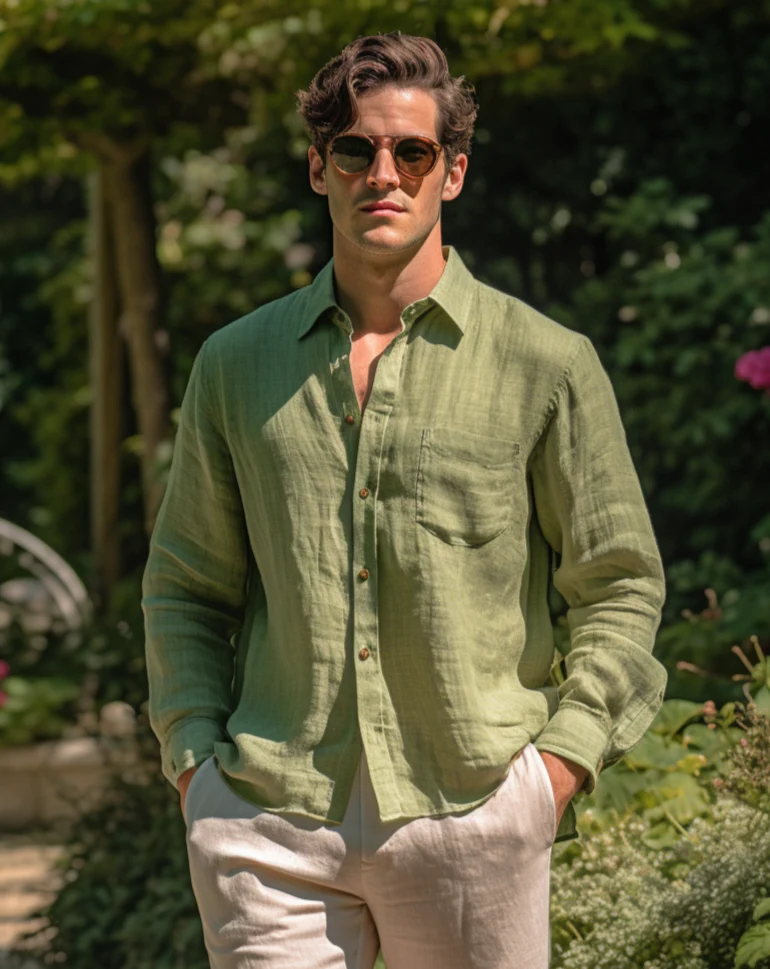
Beach and summer weddings are not like traditional indoor ceremonies. They come with a completely different set of environmental and styling challenges that directly influence what you should wear.
Heat, humidity, and sun exposure
Outdoor weddings often take place in:
- Coastal beaches
- Tropical resorts
- Garden venues
- Island destinations
These environments typically involve:
- High temperatures
- Strong sunlight exposure
- Humidity levels that reduce comfort
- Reflective surfaces like sand or water
This makes breathable wedding outfit choices essential.
Long hours in outdoor conditions
Unlike indoor weddings, beach ceremonies often include:
- Pre-ceremony photography in the sun
- Walking on sand or uneven terrain
- Extended cocktail hours
- Sunset receptions
Heavy fabrics like wool or polyester trap heat and quickly become uncomfortable.
Dress code flexibility
Beach and summer weddings often shift toward:
- Semi-formal or relaxed dress codes
- Destination wedding attire
- Barefoot or sandal-friendly looks
- Light, natural color palettes
This creates the perfect environment for linen to shine.
What Is Linen Fabric?
Linen is one of the oldest and most refined natural textiles in the world, crafted from the fibers of the flax plant. Over centuries, it has maintained its reputation not just for durability, but for its unique ability to perform exceptionally well in warm climates—making it a preferred choice for summer clothing and especially beach wedding attire.
Natural origin and eco-friendly appeal
Linen is:
- Derived from flax plant fibers
- Fully biodegradable and environmentally friendly
- Requires significantly less water and pesticides compared to cotton production
This natural production process makes linen a strong fit for modern eco-conscious wedding fashion trends, especially in destination weddings where sustainability and minimal environmental impact are increasingly valued.
Key characteristics of linen fabric
Linen is widely recognized for a combination of functional and aesthetic qualities that are difficult to replicate with synthetic materials:
- Exceptional breathability due to its loose fiber structure
- Lightweight feel that enhances comfort in hot and humid conditions
- High moisture absorption, helping manage sweat effectively
- Natural cooling properties that support temperature regulation
- Distinct textured surface that creates a relaxed yet refined look
Unlike synthetic fabrics that tend to trap heat and moisture, linen allows continuous airflow through the weave. This makes it particularly suitable for hot weather clothing, where comfort and ventilation are essential.
Linen vs other common fabrics
A closer comparison highlights why linen is often prioritized for summer and beach weddings:
Linen vs cotton
- Linen offers superior breathability
- Cotton tends to retain more moisture against the skin
- Linen dries noticeably faster, improving comfort in humid environments
Linen vs wool
- Wool is designed for insulation and warmth
- Linen provides a cooling, airy effect ideal for high temperatures
Linen vs polyester
- Polyester traps heat and reduces airflow
- Linen naturally regulates temperature and supports skin ventilation
Why Linen Is the Best Fabric for Beach Weddings?
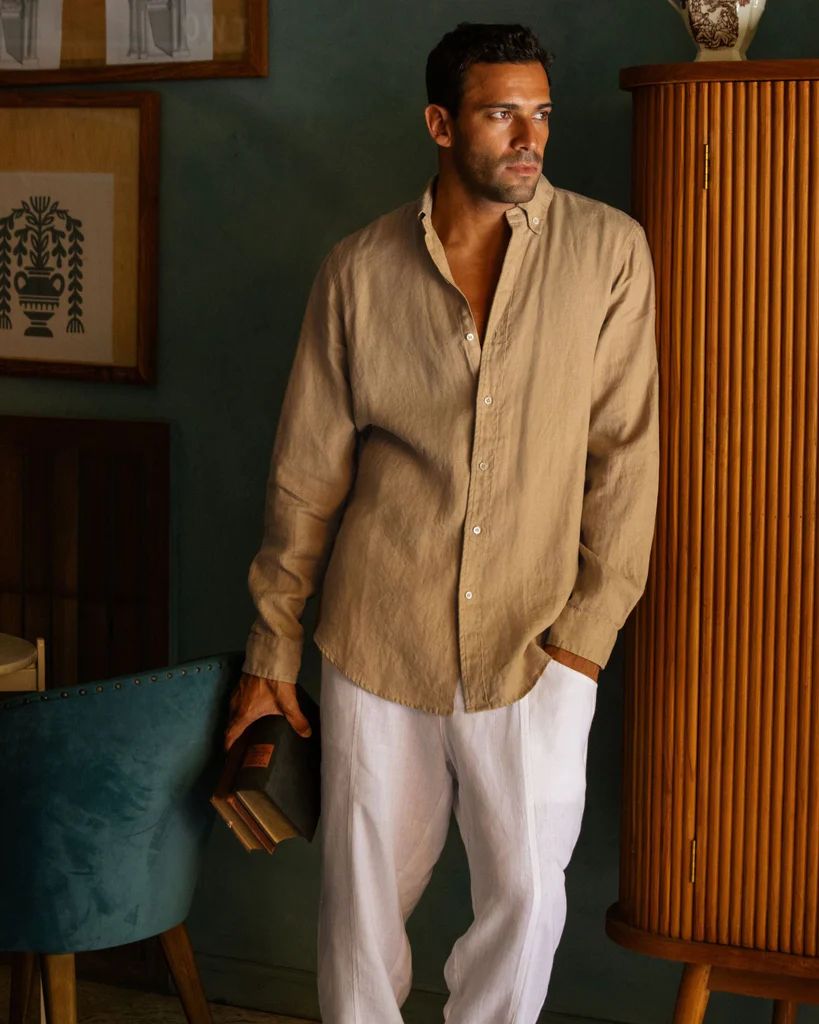
Beach weddings require a balance of comfort, mobility, and effortless visual harmony with the environment. Linen naturally meets all three requirements, making it one of the most reliable fabric choices for coastal ceremonies.
Maximum breathability for coastal environments
One of linen’s strongest advantages lies in its open weave structure, which allows air to circulate freely between the fibers. In beach settings where heat and humidity are constant factors, this breathability helps:
- Maintain airflow around the body
- Reduce excessive sweat buildup
- Support a naturally cooler wearing experience under direct sunlight
This makes linen highly suitable for beach wedding suits and lightweight formal outfits designed for outdoor ceremonies.
Lightweight comfort on sand and outdoors
Beach weddings often involve movement across uneven surfaces such as sand, grass, or stone pathways. In these conditions, fabric weight and flexibility become critical. Linen performs well because it is:
- Naturally lightweight and easy to wear for extended periods
- Non-restrictive, allowing comfortable movement throughout the day
- Flexible enough to adapt to casual and semi-formal tailoring styles
This ensures that linen suits or separates do not feel heavy or limiting, even during long ceremonies and receptions.
Perfect match for relaxed beach aesthetics
Beach weddings typically embrace a visual style that is:
- Casual yet elegant
- Minimalist and natural
- Closely connected to coastal surroundings
Linen complements this aesthetic through its organic texture and relaxed drape. The slight natural wrinkling of linen is not a flaw in this context—it enhances the effortless, unpolished elegance that defines beach wedding fashion, rather than conflicting with it.
Ideal for destination beach weddings
For destination weddings, practicality becomes just as important as appearance. Linen offers several functional advantages that make it highly travel-friendly:
- Easy to pack due to its lightweight structure
- Reduced luggage weight compared to heavier fabrics
- Versatile styling that adapts across multiple outfit combinations
- Comfortable performance in varying tropical climates
This makes linen especially effective for tropical destination wedding outfits, where weather conditions can change quickly and comfort must remain consistent throughout the event.
Why Linen Is Perfect for Summer Weddings?
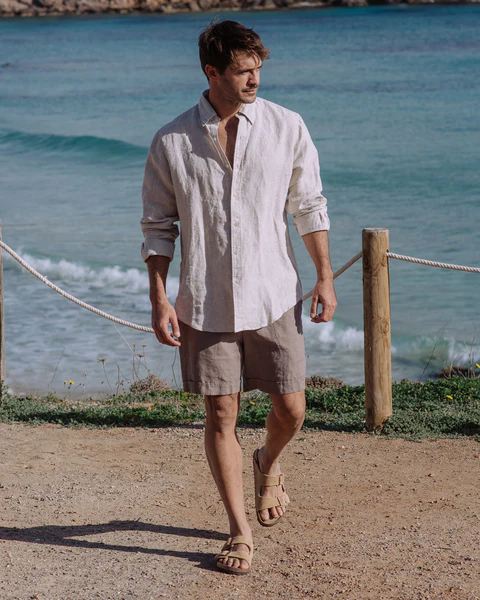
Summer weddings, whether indoor-outdoor hybrids or fully outdoor events, require fabrics that prioritize comfort.
Natural temperature regulation
Linen helps regulate body heat by:
- Allowing heat to escape
- Keeping skin cool
- Reducing overheating during long ceremonies
Sweat absorption without discomfort
Unlike synthetic fabrics:
- Linen absorbs moisture efficiently
- Does not cling to the body
- Dries quickly
This makes it ideal for humid climates.
All-day comfort from ceremony to reception
Summer weddings often last 6–10 hours. Linen ensures:
- No overheating during speeches
- Comfort during dancing
- Breathability throughout the day
The Style Appeal of Linen Wedding Outfits
Beyond function, linen is also a powerful style statement.
Effortless elegance
Linen creates a look that is:
- Relaxed yet refined
- Minimal yet sophisticated
- Natural yet stylish
This is why it is widely used in modern wedding fashion.
Popular linen suit colors
Some of the most popular options include:
- White linen suits for beach weddings
- Beige or sand tones for tropical themes
- Light grey for semi-formal elegance
- Pastel shades for modern destination weddings
Styling combinations
Common outfit combinations include:
- Linen blazer + white shirt (open collar)
- Full linen suit + loafers
- Linen shirt + tailored trousers for relaxed weddings
Minimal accessories are usually preferred to maintain balance.
The Wrinkle Factor – Problem or Advantage?

One of the most debated characteristics of linen is its natural tendency to wrinkle. In many fabrics, wrinkles are considered a flaw—but with linen, they are an inherent part of the material’s identity and performance. Understanding this distinction is key to appreciating why linen continues to dominate beach and summer wedding fashion.
Why linen wrinkles naturally?
Linen fibers are structurally different from most modern textiles:
- They are less elastic than synthetic or blended fabrics
- They are designed primarily for breathability rather than surface rigidity
- The fiber structure does not “snap back” easily after movement
As a result, linen naturally forms creases during wear. From a textile perspective, this is not a defect but a direct consequence of its open weave and natural fiber composition—both of which contribute to its cooling performance in warm climates.
Why wrinkles actually work for beach weddings?
In the context of beach and summer weddings, wrinkles take on a very different role. Instead of appearing unkempt, they often enhance the overall visual language of the setting:
- They reinforce a relaxed, unforced aesthetic that suits coastal environments
- They blend naturally with organic elements such as sand, wind, and sunlight
- They contribute to a sense of effortless sophistication rather than strict formality
This is why linen is frequently associated with “relaxed luxury”—a style where imperfection becomes part of the design narrative rather than something to correct.
How to manage linen wrinkles?
While wrinkles are expected, their intensity can still be controlled for a more refined appearance:
- Light steaming before the event helps soften deep creases
- Linen blends offer improved structure with slightly reduced wrinkling
- Proper folding and hanging preserve garment shape during travel
- Well-fitted tailoring minimizes excess fabric movement, reducing crease formation during wear
The goal is not to eliminate wrinkles entirely, but to manage them so they remain subtle and intentional rather than distracting.
Linen vs Other Summer Wedding Fabrics
A closer comparison reveals why linen consistently remains the preferred choice in warm-weather formalwear, especially for outdoor and destination weddings.
Linen vs cotton
Both linen and cotton are natural fibers, but their performance differs significantly in heat:
- Linen offers higher breathability due to its looser weave
- Cotton feels smoother but tends to retain more heat and moisture
- Linen dries faster, making it more suitable for humid or coastal environments
In summer wedding settings, linen typically provides a cooler and more comfortable experience over extended wear.
Linen vs wool
Wool is traditionally associated with structure and formal tailoring, but it is not optimized for warm climates:
- Wool provides structure but retains heat
- Linen is lightweight and promotes airflow
- Wool can feel heavy during long outdoor ceremonies
- Linen maintains comfort even under direct sunlight
This contrast makes linen far more practical for beach and summer weddings.
Linen vs synthetic fabrics
Synthetic fabrics are often used for durability, but they fall short in natural climate regulation:
- Synthetic materials are durable and wrinkle-resistant
- However, they trap heat and restrict airflow
- Linen allows natural cooling and moisture absorption
- Synthetic options lack the organic texture and elegance of linen
For wedding environments that prioritize comfort and aesthetic harmony, linen remains the more balanced choice.
Best Linen Suit Styles for Beach & Summer Weddings
Linen suits are not one-dimensional; they adapt to different wedding tones, from relaxed beach ceremonies to semi-formal summer receptions.
Slim-fit linen suits
Slim-fit linen suits offer a more structured interpretation of this relaxed fabric:
- Provide a modern and clean silhouette
- Suitable for grooms who prefer a refined look
- Work well for semi-formal beach or garden weddings
This style balances elegance with comfort without losing the natural appeal of linen.
Relaxed-fit linen suits
Relaxed-fit designs emphasize comfort and ease of movement:
- Prioritize airflow and breathability
- Ideal for tropical climates and high humidity
- Well-suited for destination weddings with casual dress codes
This silhouette aligns closely with the effortless nature of beach ceremonies.
Linen separates
Linen separates offer maximum flexibility in styling:
- Allow mix-and-match combinations of jackets, shirts, and trousers
- Support varying levels of formality within the same outfit
- Ideal for casual beach weddings or multi-event destination celebrations
This approach gives more freedom in adapting to different wedding moments throughout the day.
How to Choose the Best Linen Wedding Outfit?
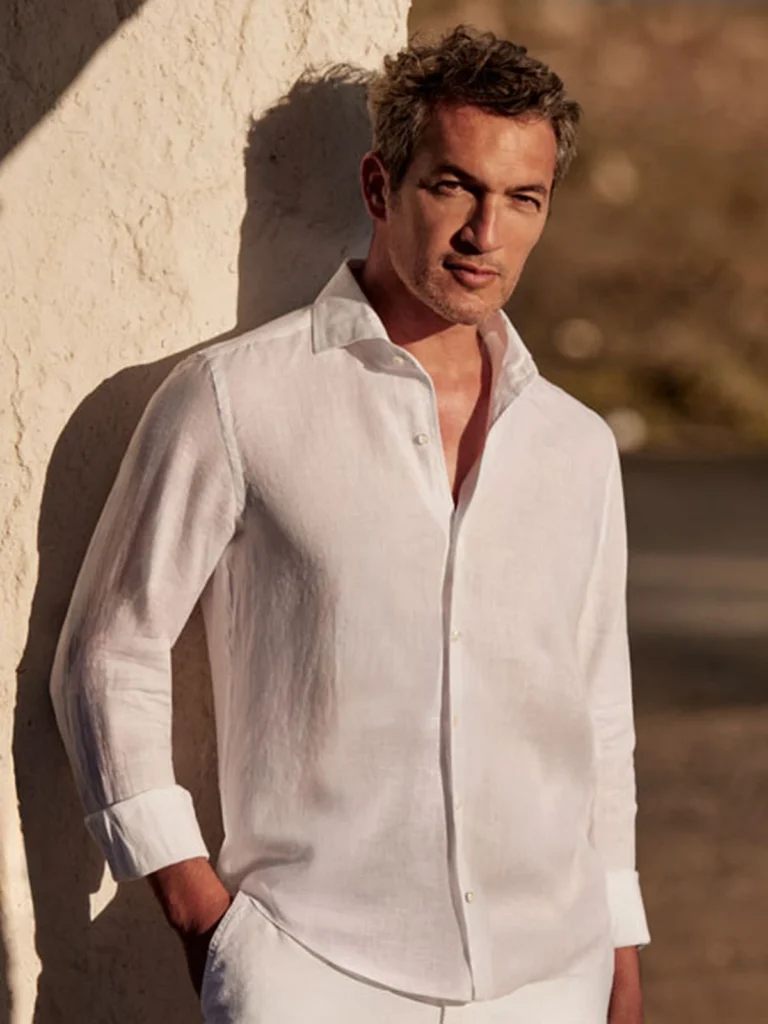
Selecting the right linen outfit requires more than choosing a fabric—it involves understanding context, quality, and fit to achieve both comfort and visual balance.
Consider wedding formality
Different wedding styles require different levels of structure:
- Casual beach weddings relaxed linen pieces with minimal tailoring
- Semi-formal weddings structured linen suits with clean lines
- Formal destination weddings high-quality linen blends with refined construction
Matching fabric formality with event tone ensures visual consistency.
Fabric quality matters
Not all linen is created equal, and quality significantly impacts both appearance and performance:
- 100% linen provides maximum breathability and authentic texture
- Linen blends reduce wrinkling and increase structural stability
- Irish linen is known for its durability and natural richness
- Italian linen offers a more polished and refined finish
Choosing the right type depends on the balance between comfort and presentation.
Fit is everything
Even the best fabric loses impact without proper tailoring. Key fitting elements include:
- Shoulder alignment for structural balance
- Correct sleeve length for proportion
- Appropriate trouser break for clean lines
- Waist structure to maintain silhouette definition
Well-fitted linen enhances both comfort and elegance, ensuring the garment performs well throughout long wedding events.
Styling Tips for Linen Wedding Outfits
A well-styled linen outfit is not about complexity, but about balance—where comfort, fabric behavior, and wedding context work together to create a refined yet effortless look.
Best footwear choices
Footwear plays a defining role in completing a linen-based wedding outfit, especially in outdoor or coastal environments:
- Loafers offer a clean, semi-formal structure that pairs well with tailored linen suits, making them suitable for grooms and guests in semi-formal settings.
- Leather sandals are commonly used for beach weddings, providing breathability and a relaxed aesthetic while maintaining a degree of elegance.
- Barefoot styling is often seen in ultra-casual beach ceremonies, where the natural environment becomes part of the overall styling concept rather than being contrasted by formal footwear.
Each option reflects a different level of formality, allowing linen to adapt seamlessly to the wedding environment.
Accessories
With linen, accessories should enhance rather than dominate the outfit. The fabric itself already carries visual texture and presence, so restraint is key:
- Minimal ties or open-collar styling are often preferred to maintain airflow and a relaxed appearance
- Lightweight pocket squares add subtle structure without overwhelming the outfit
- Natural materials, such as wood, linen blends, or matte finishes, help maintain consistency with the organic aesthetic of linen
The goal is cohesion—every accessory should feel intentional but understated.
Groom vs guest styling
Linen allows clear stylistic differentiation between roles within the wedding while maintaining visual harmony:
- Groom styling typically leans toward sharper tailoring, refined silhouettes, and lighter premium tones such as ivory, off-white, or soft beige. The aim is to maintain presence without losing the natural ease of linen.
- Guest styling is generally more relaxed, with flexible fits, softer structures, and a broader range of neutral or pastel tones, allowing comfort and adaptability throughout the event.
This distinction ensures the groom stands out appropriately while guests remain aligned with the overall aesthetic.
Common Mistakes to Avoid
Even with a versatile fabric like linen, styling errors can significantly affect both comfort and appearance. Awareness of these common mistakes helps maintain a polished result.
- Choosing heavy linen blends that reduce breathability, especially in hot or humid climates
- Over-accessorizing, which disrupts the natural simplicity and texture of linen
- Ignoring tailoring, leading to oversized or unstructured silhouettes that reduce elegance
- Expecting a wrinkle-free finish, which contradicts the natural behavior and aesthetic of linen
- Wearing dark colors in extreme heat, which can absorb heat and reduce overall comfort
Avoiding these issues ensures linen performs as intended—light, breathable, and visually balanced.
FAQs About Best Fabric For Beach & Summer Weddings
Quick answers to common concerns help clarify how linen functions in real wedding settings.
Is linen too casual for weddings?
Linen is not inherently casual or formal. Its final appearance depends on tailoring, fabric quality, and styling choices, allowing it to fit both relaxed beach weddings and more structured summer ceremonies.
Does linen wrinkle too much?
Linen naturally wrinkles due to its fiber structure. However, in beach and summer environments, these creases are often perceived as part of its relaxed, elegant character rather than a flaw.
Is linen good for formal weddings?
Yes, linen can be appropriate for formal destination or summer weddings when paired with refined tailoring and higher-quality fabric blends that enhance structure.
What is the best color for linen wedding suits?
Light, breathable tones are most effective in warm climates, including white, beige, sand, light grey, and soft pastel shades that complement outdoor lighting and coastal scenery.
Can grooms wear linen suits?
Linen is widely used in groom styling for beach and destination weddings due to its balance of comfort, elegance, and adaptability to warm-weather conditions.
Conclusion
As Velinzi, I can confidently say that when it comes to warm-weather celebrations, few fabrics match the performance and elegance of linen. From its natural breathability to its effortless aesthetic, linen consistently proves itself as the ideal choice for coastal ceremonies and tropical environments. That is why understanding Why Linen Is the Best Fabric for Beach & Summer Weddings is essential for anyone planning a destination or summer celebration. It is not just about looking good—it is about feeling comfortable, confident, and fully present in one of the most important moments of life.