When it comes to summer elegance, nothing beats a linen suit. But if you’ve ever worn one to a wedding, you already know the biggest challenge: wrinkles. Linen is breathable, lightweight, and perfect for warm-weather ceremonies—but it creases fast. That’s why learning how to steam or iron a linen wedding suit properly is essential if you want to look polished from the first photo to the last dance. At Velinzi, we believe that style isn’t just about what you wear—it’s about how you maintain it. In this complete guide, you’ll learn everything from linen suit wrinkle removal techniques to steaming vs ironing linen suit comparisons, plus expert tips to keep your outfit sharp all day.
Why Linen Suits Wrinkle So Easily?

Before diving into techniques, it helps to understand the fabric itself. Linen is made from natural flax fibers, which have a looser weave compared to cotton or wool. This structure is what makes linen:
- Highly breathable
- Moisture-absorbing
- Lightweight and ideal for summer weddings
However, that same structure also makes it one of the most wrinkle-prone fabrics. Key Reasons Linen Wrinkles:
- Low elasticity: Fibers don’t bounce back easily
- Moisture sensitivity: Absorbs humidity quickly
- Movement creases: Sitting, bending, and walking all create folds
While wrinkles are part of linen’s relaxed charm, a wedding requires a more refined look. That’s where proper garment steaming techniques and fabric pressing methods come in.
Steaming vs Ironing Linen Suit – Which Is Better?
One of the most common questions is: Should you steam or iron a linen suit? The answer: both have their place.
Benefits of Steaming a Linen Suit
Steaming is the gentlest method of wrinkle removal.
- Relaxes fibers without direct pressure
- Ideal for delicate areas like jackets
- Quick and convenient for last-minute touch-ups
- Reduces risk of shine or scorch marks
Steaming is especially useful for:
- Vertical steaming suit jacket
- Quick refresh before the ceremony
- Destination weddings
Benefits of Ironing a Linen Suit
Ironing delivers a more structured, formal finish.
- Creates crisp lines and sharp creases
- Best for trousers and lapels
- Effective on stubborn wrinkles
- Provides a tailored appearance
Ironing is ideal when:
- Preparing your suit the night before
- You need a polished, formal look
- Working with thicker linen fabrics
When to Use Steamer vs Iron?
| Situation | Best Method |
|---|---|
| Quick fix before wedding | Steaming |
| Deep wrinkle removal | Ironing |
| Travel touch-ups | Handheld steamer |
| Sharp creases needed | Ironing |
| Full preparation | Both combined |
The best strategy? Use ironing for structure and steaming for maintenance.
Tools You Need to Steam or Iron a Linen Suit Properly
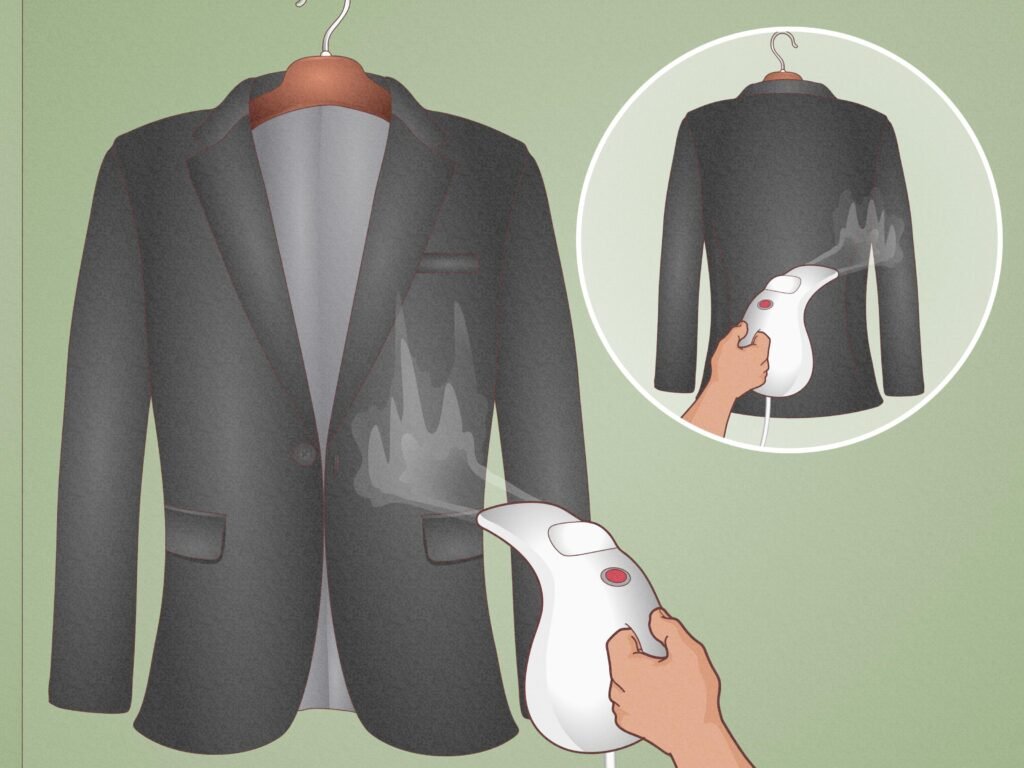
Choosing the right tools isn’t just about convenience—it directly impacts how effectively you can control wrinkles and protect the integrity of linen fibers over time.
Essential Tools
These are non-negotiable if you want consistent, professional-looking results:
- Garment steamer (handheld or standing): A standing steamer offers stronger, continuous steam—ideal for full suit preparation. Handheld models work well for quick touch-ups or travel, but may require more passes on stubborn wrinkles.
- Steam iron with adjustable heat settings: Linen requires high heat with moisture. An iron that allows precise temperature and steam control helps avoid overheating while still smoothing deep creases.
- Ironing board: A stable, padded surface ensures even pressure distribution. This is especially important when pressing trousers or structured areas like lapels.
Recommended Accessories
These small additions significantly improve results and reduce common risks:
- Pressing cloth for linen: Acts as a barrier between the iron and fabric, preventing shine marks and heat damage—particularly important for darker linen suits.
- Distilled water: Tap water can leave mineral stains or residue over time. Distilled water ensures cleaner steam and prolongs the life of your tools.
- Wrinkle release spray: Not a replacement for steaming or ironing, but useful for minor touch-ups when you don’t have full equipment available.
Optional Upgrades
For those who want a more refined finish or frequently wear linen:
- Travel steamer: Compact and practical for destination weddings or last-minute fixes in hotel rooms.
- Padded hanger: Helps maintain the shape of the jacket while steaming and prevents shoulder distortion.
- Professional suit steaming tools: Advanced steamers or pressing systems can deliver near tailor-level results, especially useful for high-end or structured linen suits.
How to Steam a Linen Wedding Suit? (Step-by-Step)
Steaming is the safest and most forgiving method for linen, especially when you want to remove wrinkles without flattening the fabric’s natural texture.
Step 1 – Hang the Suit Properly
- Use a sturdy, well-shaped hanger
- Ensure the suit hangs freely without touching other surfaces
- Leave enough space around it for steam circulation
Proper setup is key to effective vertical steaming and prevents uneven wrinkle removal.
Step 2 – Use the Right Steam Settings
- Set to medium or high steam depending on fabric thickness
- Keep the nozzle about 1–2 inches from the fabric
- Avoid prolonged steaming in one spot
This balance helps relax fibers without causing water spots or over-saturation.
Step 3 – Steam the Jacket First
Work methodically from top to bottom:
- Shoulders (structure area)
- Sleeves (common wrinkle zones)
- Chest and back
Use slow, downward motions. Let the steam do the work rather than pressing aggressively.
Step 4 – Steam Trousers Carefully
- Apply light, even steam
- Focus on major wrinkle areas rather than the entire surface
- Allow gravity to naturally pull the fabric straight
Over-steaming trousers can make them look limp instead of refined.
Step 5 – Let It Dry Naturally
- Allow the suit to air dry completely
- Avoid wearing it immediately
- Do not fold or compress the fabric
This step stabilizes the fibers and helps maintain a wrinkle-free linen suit for longer.
How to Iron a Linen Suit Properly? (Step-by-Step)
Ironing is the method of choice when you need a sharper, more structured appearance—especially for formal wedding settings.
Step 1 – Set the Correct Temperature
- Use the linen setting (high heat)
- Activate steam function
Always check the garment label first to avoid accidental damage, particularly with linen blends.
Step 2 – Iron While Slightly Damp
Linen responds best to heat when moisture is present:
- Lightly mist the fabric or use built-in steam
- Avoid ironing completely dry linen
This makes it easier to remove deep creases efficiently.
Step 3 – Turn Suit Inside Out
- Protects the outer surface from shine
- Reduces risk of heat marks
This is especially important for darker tones or finer linen weaves.
Step 4 – Use a Pressing Cloth
A pressing cloth adds a layer of control:
- Prevents direct heat contact
- Distributes temperature evenly
- Minimizes risk of scorching or gloss
It’s a simple step that significantly elevates the final result.
Step 5 – Focus on Key Areas
Jacket:
- Lapels (for structure)
- Shoulders (shape retention)
- Sleeves (visible lines)
Trousers:
- Creases (sharpness)
- Seams (clean finish)
Apply firm but controlled pressure—avoid dragging the iron too quickly, as linen needs time under heat to relax properly.
Mastering both steaming and ironing techniques ensures flexibility: steaming for maintenance and ironing for structure. Combining the two methods is what consistently delivers a polished, wedding-ready linen suit.
Pro Tips to Keep a Linen Suit Wrinkle-Free for a Wedding

Even with proper steaming or ironing, linen naturally tends to crease throughout the day. The goal isn’t to eliminate wrinkles entirely, but to control them so the suit still looks intentional and refined.
- Steam the suit the night before: This gives the fabric enough time to fully dry and settle. Freshly steamed linen worn immediately often creases faster because the fibers are still slightly relaxed.
- Always hang, never fold: Hanging preserves the garment’s structure and prevents new crease lines from forming—especially important for jackets and tailored trousers.
- Use a breathable garment bag: Avoid plastic covers. Linen needs airflow; otherwise, trapped moisture can lead to wrinkles or a slightly “damp” look.
- Limit prolonged sitting: Extended pressure on areas like the back of the thighs or elbows creates deep creases. Standing or moving periodically helps maintain a cleaner silhouette.
- Opt for linen blends when possible: Pure linen wrinkles more aggressively. Blends (linen-cotton, linen-viscose) offer better wrinkle resistance while maintaining breathability.
For outdoor weddings:
- Stay in shaded areas to reduce heat-induced creasing
- Minimize contact with humidity or sweat, which softens fibers and increases wrinkling
Common Mistakes to Avoid
Most issues with linen don’t come from the fabric itself, but from how it’s handled. Avoiding these mistakes can make a noticeable difference in overall appearance.
- Using Too Much Heat: Excessive heat can scorch or weaken linen fibers, especially when applied directly without moisture. Linen requires high heat—but always with steam or dampness.
- Ironing Completely Dry Linen: Dry linen resists pressing and often results in stubborn, uneven creases. Slight moisture allows fibers to relax and reshape more effectively.
- Skipping a Pressing Cloth: Direct heat contact can leave shine marks, particularly on darker fabrics. A pressing cloth acts as a buffer and ensures a more even finish.
- Over-Steaming: Too much steam can oversaturate the fabric, making it appear limp or stretched. Controlled, even passes are more effective than prolonged exposure.
- Folding Immediately After Steaming: This is one of the fastest ways to undo your effort. Linen needs time to cool and set; folding too soon creates fresh wrinkles instantly.
Emergency Wrinkle Fixes Before the Wedding
Even with preparation, last-minute wrinkles can happen—especially during travel or long hours of wear. These quick fixes help restore a presentable look without full ironing.
- Use a handheld steamer: Ideal for targeted touch-ups on jackets or sleeves. Quick and efficient when time is limited.
- Hang the suit in a steamy bathroom: Not as effective as direct steaming, but sufficient for light wrinkles when no tools are available.
- Light mist + hand smoothing technique: A small amount of water combined with gentle hand pressure can relax minor creases in seconds.
- Travel iron for quick pressing: Useful for trousers or visible areas that require sharper definition.
These methods are particularly useful for last-minute suit steaming before a ceremony, where precision matters but time is limited.
How to Travel With a Linen Suit Without Wrinkles?
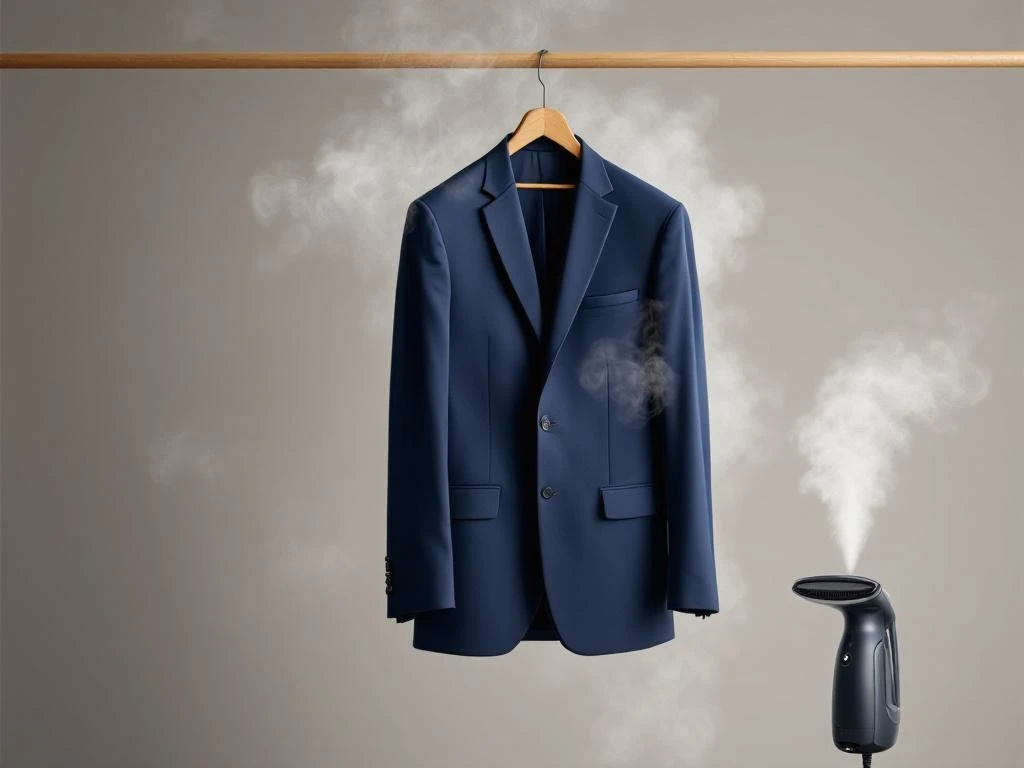
Transporting linen requires a different approach compared to heavier fabrics. Poor packing is one of the main causes of deep creasing.
Best Practices:
- Use a garment bag: Keeps the suit extended and protected during transit.
- Roll trousers instead of folding: Rolling reduces hard crease lines and distributes pressure more evenly.
- Pack the suit last: Prevents it from being compressed under other items.
- Steam immediately upon arrival: Address wrinkles early before they set deeper into the fabric.
What to Bring:
- Travel steamer
- Wrinkle release spray
These small additions can significantly reduce the need for intensive ironing later.
Advanced Linen Suit Care Tips
Maintaining linen over time requires a more strategic approach beyond occasional steaming or ironing.
Choose the Right Fabric
- Linen blends offer better wrinkle resistance
- Higher-quality linen tends to hold its shape and structure longer
Understand Heat Settings for Linen
- Linen responds best to high heat combined with moisture
- Dry heat alone is ineffective and increases risk of damage
Use Moisture and Steam Strategically
- Steam relaxes fibers without flattening texture
- Light moisture enhances pressing efficiency
Wearing linen repeatedly without rest causes fibers to fatigue. Allowing time between wears helps the fabric recover and maintain its form.
FAQs: How To Steam Or Iron A Linen Wedding Suit Properly?
These are the most common questions when dealing with linen care, especially for formal occasions.
Can you steam a linen suit instead of ironing?
Yes. Steaming is gentler and works well for general wrinkle removal. However, ironing is still necessary when a sharper, more structured finish is required.
What temperature should you use for linen?
High heat with steam is ideal. Linen fibers need both temperature and moisture to respond effectively.
Is steaming better than ironing for linen suits?
They serve different purposes. Steaming is safer and quicker, while ironing provides precision and structure. The best results usually come from combining both.
How long does it take to steam a linen suit?
On average, 10–15 minutes is enough for a full suit, depending on wrinkle severity and fabric thickness.
Can you iron linen without steam?
Technically yes, but results are limited. Linen responds significantly better when moisture is involved.
Conclusion
Mastering how to steam or iron a linen wedding suit properly is the difference between looking effortlessly stylish and appearing unprepared. Linen may wrinkle easily, but with the right techniques—steaming, ironing, and proper fabric care—you can maintain a clean, elegant look throughout the entire event. At Velinzi, we always recommend combining both methods: Iron your suit for structure, then use steaming for maintenance and quick touch-ups. Prepare ahead, avoid common mistakes, and embrace linen’s natural charm—refined, relaxed, and perfectly suited for weddings.